Latest Investigation
For the first time in UK history, we covertly captured an M&S inspection at an award-winning, RSPCA Assured dairy farm in Gloucestershire.
Watch the investigation
Content warning: This video contains footage of newborn calves being hit, kicked, thrown and subjected to painful mutilations.
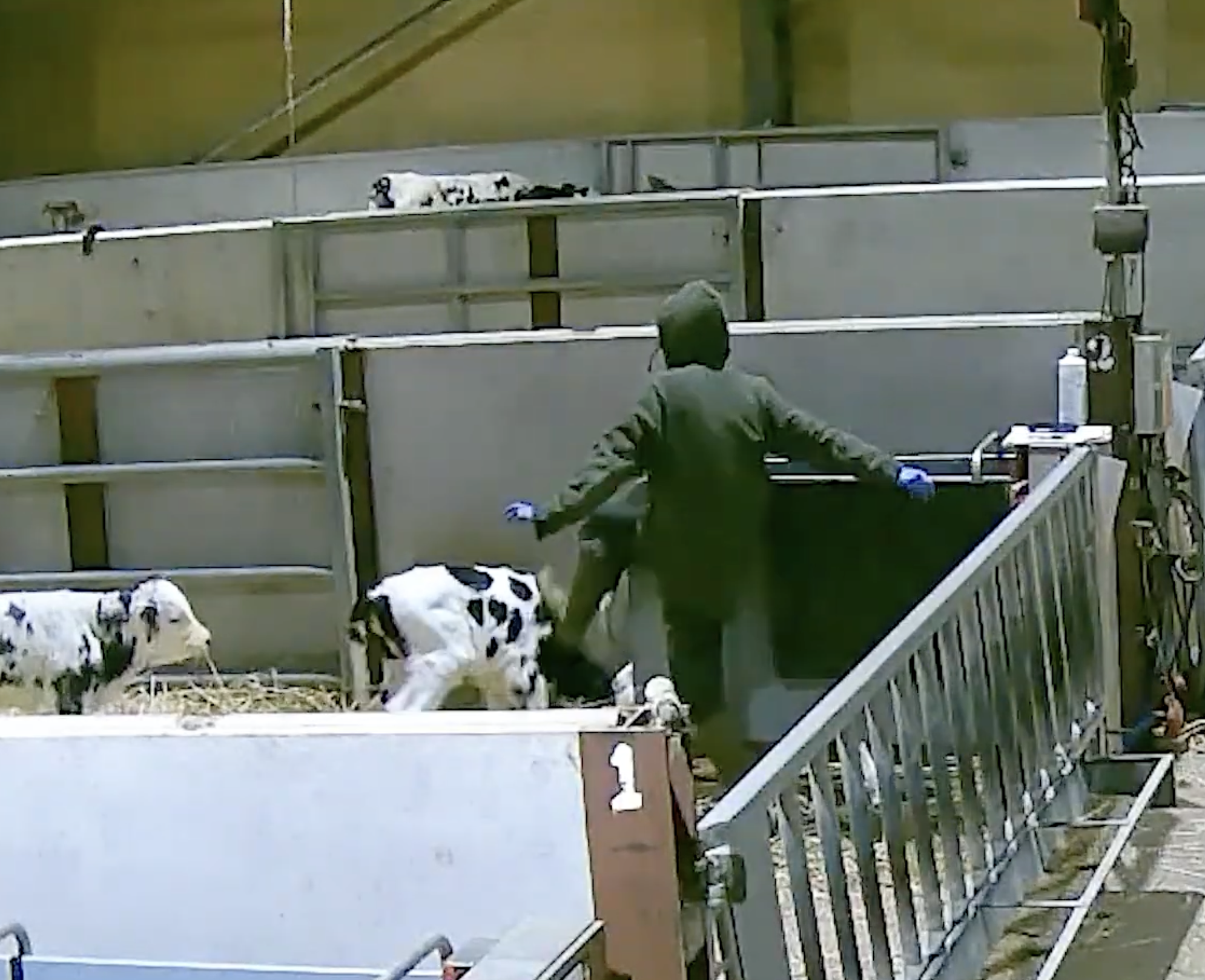
A newborn calf is violently kicked by a female worker.
Between November 2025 and February 2026, hidden cameras at this award-winning dairy farm recorded newborn calves being kicked, hit, thrown, sworn at and force-fed synthetic milk – which caused one calf to drown due to milk being tubed into her lungs. Documents on the farm showed many other calves had also recently died by drowning.
The cameras caught calves being subjected to painful mutilations – including their sensitive horn buds burned off with hot irons and surgical castration with no anaesthetic.
Over three days in November 2025, we recorded more than
700 incidents of abuse.
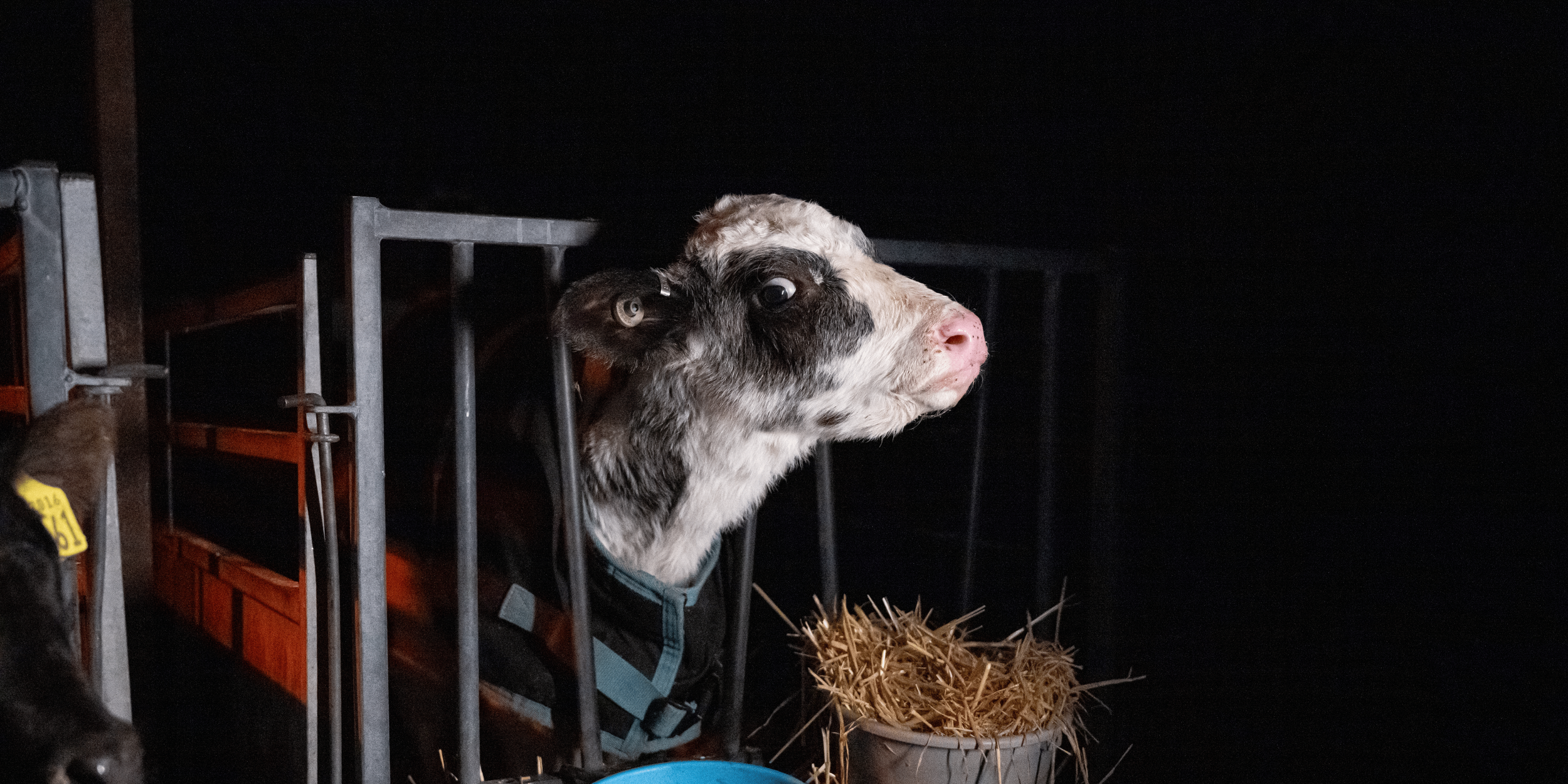
Several calves were left without milk for up to 19 hours. Footage showed calves crying, circling and licking metal bars – signs of hunger and psychological distress, made worse by the recent separation from their mothers. Each calf was only hours’ or days’ old.
Many calves were suffering from diarrhoea, due to the synthetic milk formula they were fed, leaving them weak and their skin raw.
When investigators returned in February 2026 after the M&S inspection, similar abuse and neglect continued. By then, the farm was no longer RSPCA Assured, following Marks & Spencer’s removal of all its milk from the RSPCA Assured scheme after the RSPCA introduced updated dairy standards.
An independent animal welfare expert reviewed the footage and identified potential breaches across 12 areas of animal welfare law and 14 further welfare concerns.
What our cameras found
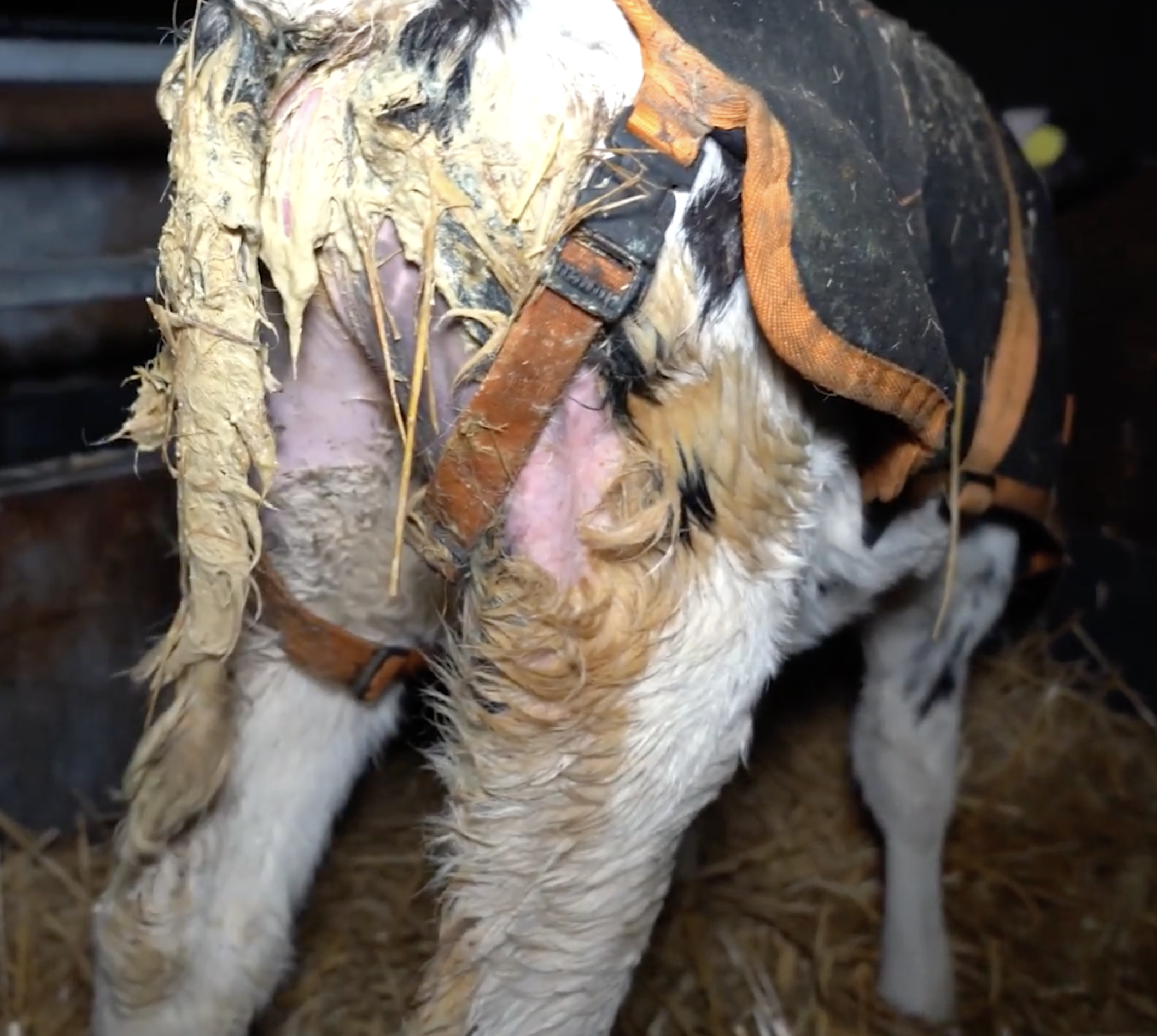
Diarrhea is common in calves due to the synthetic milk they have to drink.
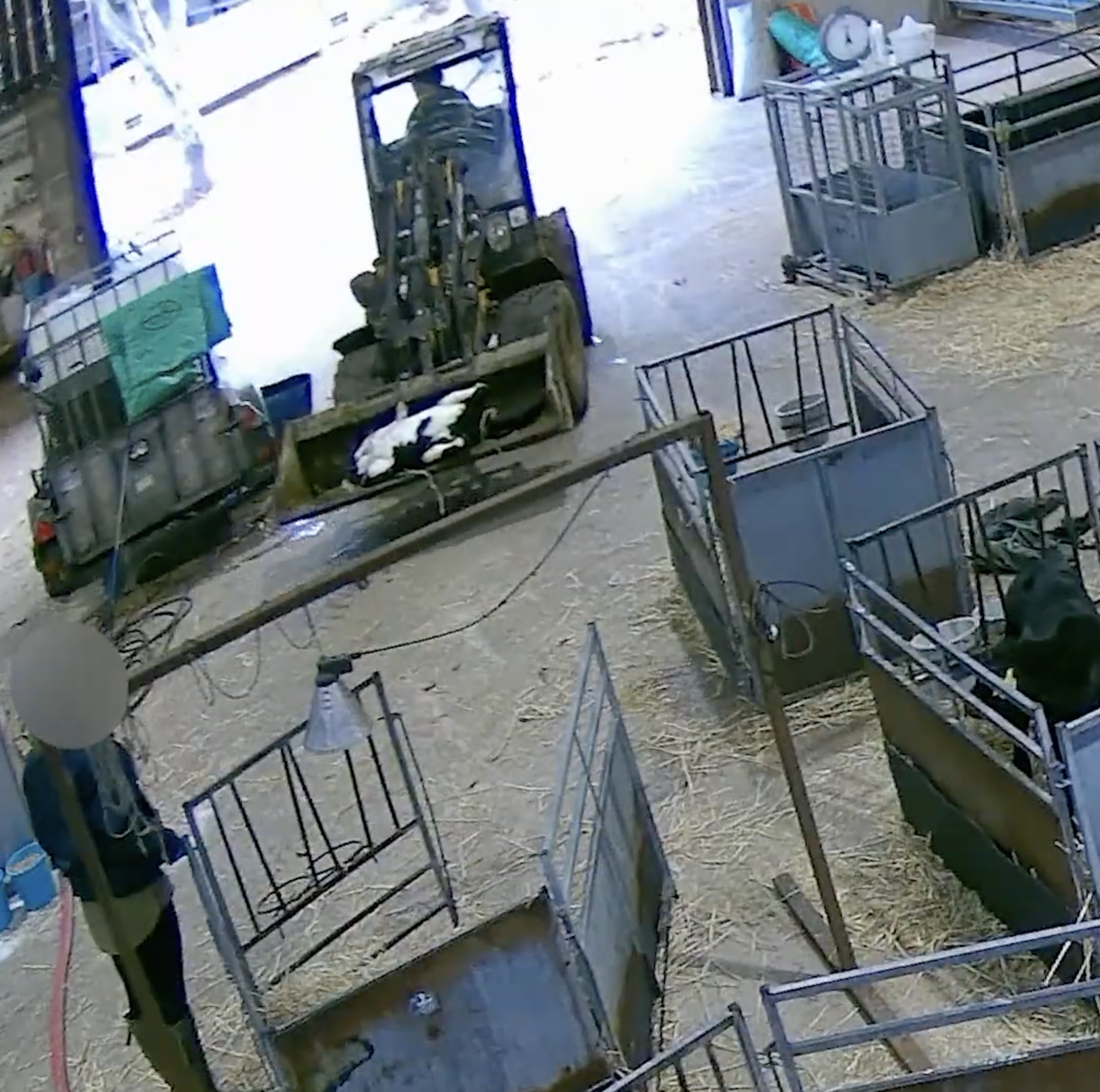
A dead calf is removed 3 hours before an inspection.
What the inspection missed
During our November visit, an M&S inspector arrived to assess the farm against RSPCA Assured welfare standards. But workers already knew they were coming, with a worker saying that morning:
“We’ve got an M&S inspection today… This could really look bad.”
Our cameras caught their clean-up operation, with workers hastily throwing more straw into the pens and removing a dead calf less than 3 hours before the assessor arrived.
The inspection lasted just 10 minutes. No pens were entered. No calves were physically examined. Less than a minute after the inspector left, the abuse resumed, with a worker repeatedly striking a calf in the face with a feeding tube.
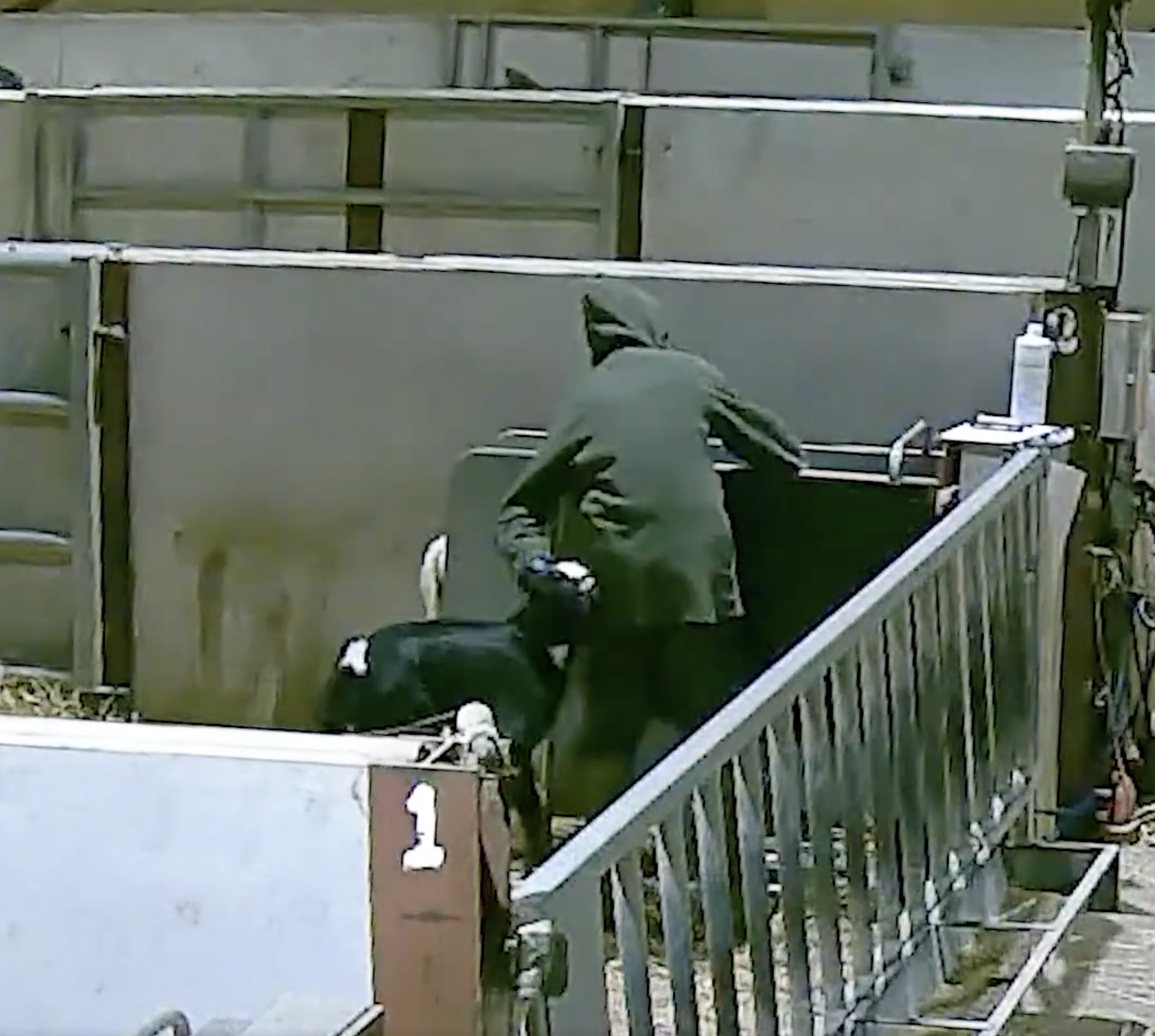
A hungry calf is abused by a female worker.
‘Higher welfare’ marketing
This farm is regarded as the ‘gold standard’ of the dairy industry:
It supplies M&S and Müller.
It has won industry awards for being ‘high welfare’.
Its co-owner sits on multiple industry boards (including the AHDB Dairy Council), and was a finalist for ‘Dairy Farmer of the Year’.
It carried the name of the UK's most trusted animal charity – the RSPCA.
When the RSPCA puts its name on a farm or slaughterhouse, it's telling the public:
This place has been approved by a charity whose only job is to protect animals from cruelty.
We believe the public has a right to know what ‘higher welfare’ and ‘RSPCA Assured’ actually looks like.
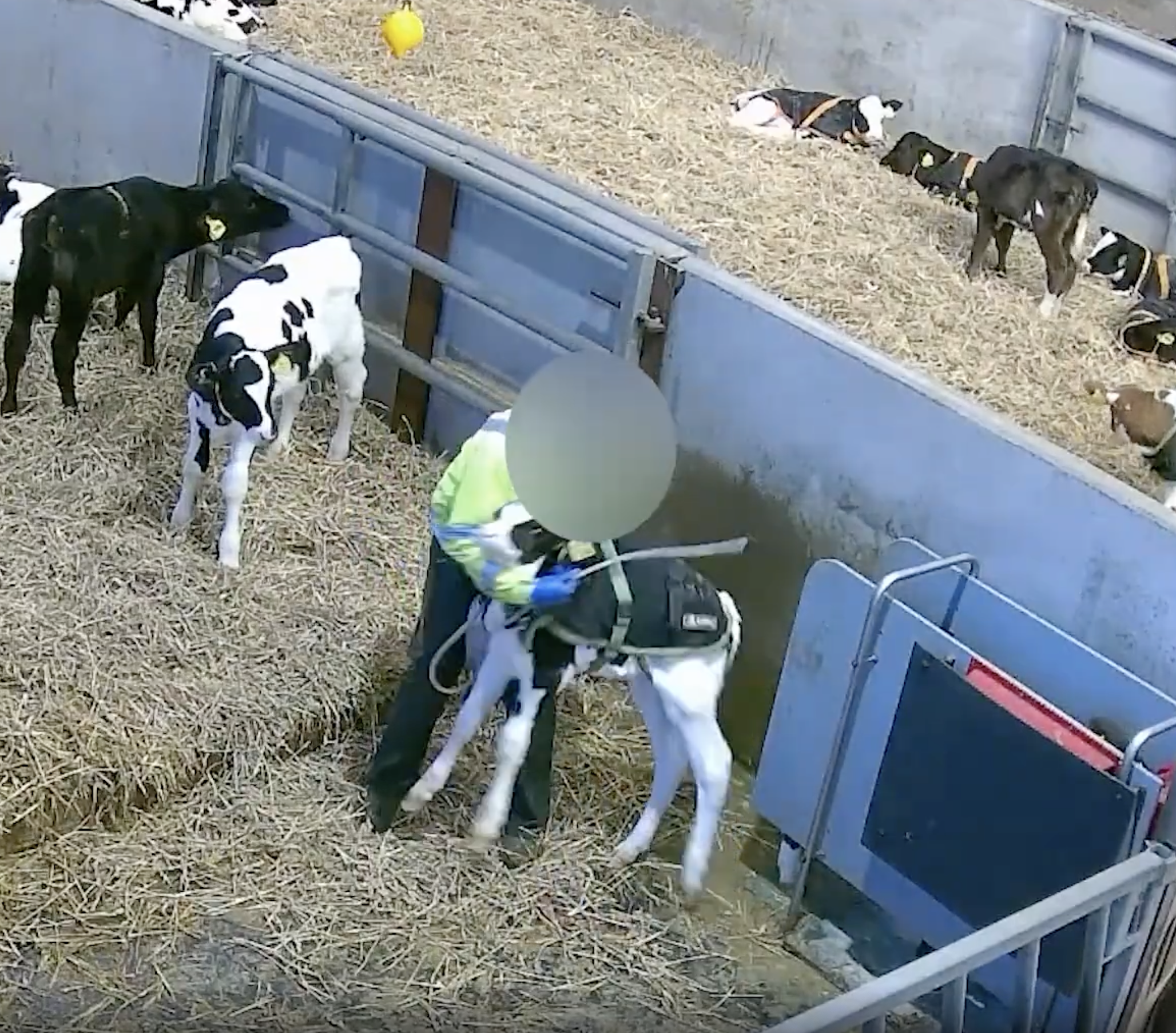
A calf is thrown to the ground by a female worker.
This investigation is different
We filmed during an M&S inspection, checking welfare standards at a farm carrying the RSPCA Assured label. This was the very moment when the system was supposed to protect animals.
Inspections – whether announced or unannounced – cannot catch abuse or neglect. Only undercover investigations expose what’s really happening to animals.
But why are other animal protection organisations having to investigate farms and slaughterhouses the RSPCA certifies?
The RSPCA exists to prevent cruelty, not approve it.
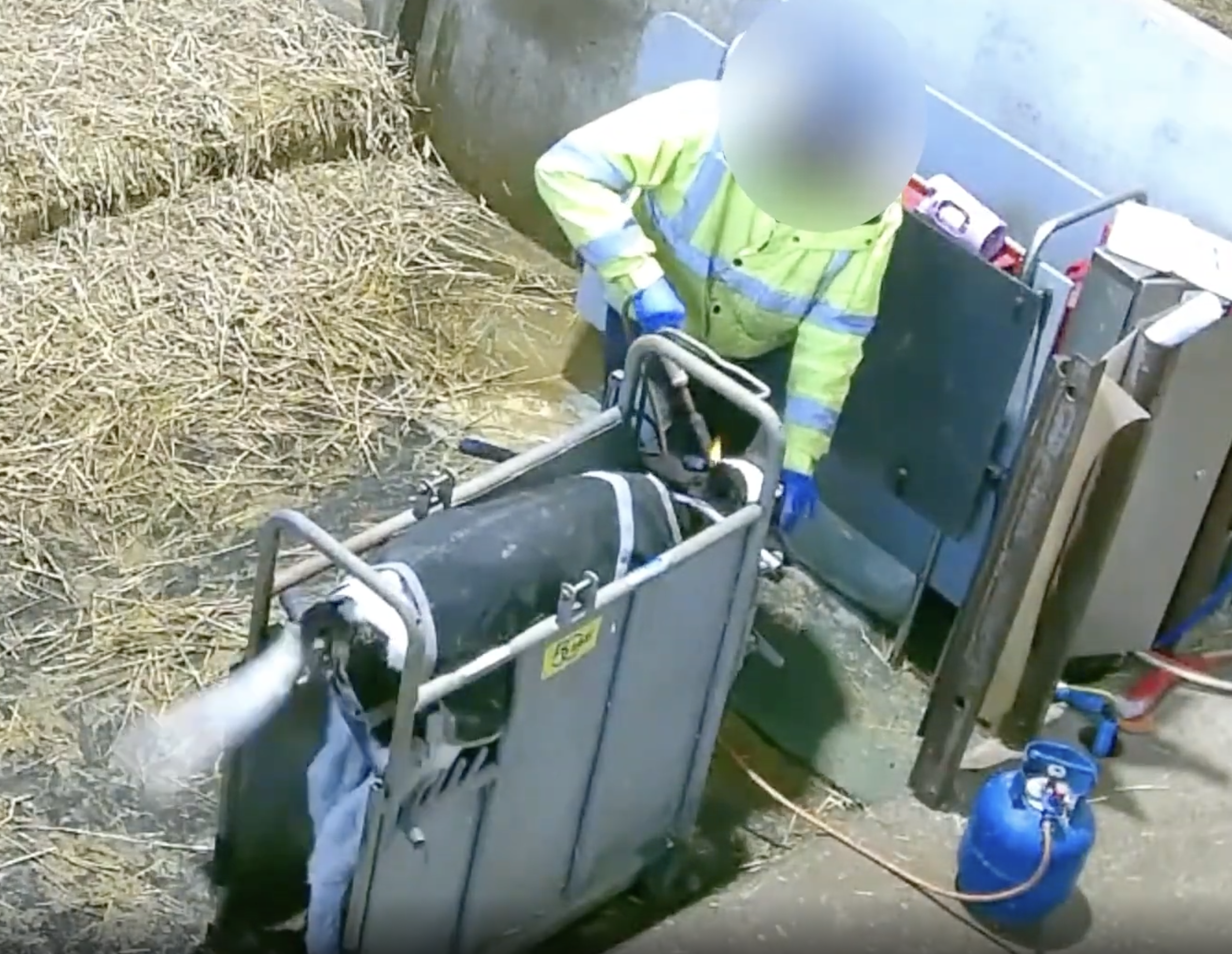
A newborn calf is confined in a ‘crush’ while they have their horn buds burned off. This is permitted under RSPCA Assured standards.
Cruelty and suffering are systemic
Much of what this investigation exposes is not just a failure of this farm – it is permitted by the RSPCA Assured scheme.
The scheme allows newborn calves to: be separated from their mothers, be confined indoors, have horn buds burned off with hot irons, be castrated, be force-fed synthetic milk, and be slaughtered.
This is not about one bad farm or a few bad workers. It shows what the best of the industry actually looks like – and what that means for every animal in a factory farm the RSPCA puts its name to.